Recycling and Sustainability for Gardening Services Croydon
 At Gardening Services Croydon we place eco-friendly waste disposal area practices at the heart of every job. Our approach to garden clearance and routine maintenance focuses on reducing landfill, diverting organic matter into productive recycling streams, and supporting a sustainable rubbish gardening area across Croydon and the surrounding boroughs. This page explains our targets, local partnerships, and the practical steps we take on every site to lower environmental impact while maintaining beautiful outdoor spaces.
We recognise the borough's mixed approach to waste separation — green garden waste for composting, separate collections for dry recyclables and food waste — and we design our operations to complement those services. Our teams are trained to segregate materials on-site, keep soil and inert materials separate where possible, and to prioritise reuse and composting over disposal.
 Our commitment is measurable: we have set a recycling percentage target of 80% by weight for all garden waste and related materials collected through Gardening Services Croydon. This figure covers organic waste, wood, soil suitable for reuse, metal fixtures and hard landscaping elements that can be reclaimed. Hitting this target requires careful sorting, transport to the correct facilities, and collaborative working with local transfer stations and community partners.
How we manage an eco-friendly waste disposal area
On-site we create a clear flow between the collection point and the temporary sort area so materials destined for recycling do not contaminate other streams. Green waste is separated from general rubbish and from inert debris like concrete; woody prunings are chipped for compost or biomass where feasible. We also identify opportunities for reuse — for example, intact paving slabs, sleepers and stones are catalogued and offered for reuse through partner networks.
To make this work at scale we use a combination of licensed transfer stations and authorised composting sites. Our regular routes include drop-offs at the borough and regional transfer stations that accept segregated garden waste, wood, soil for remediation, and recyclable hard materials. When a material can be reprocessed locally we select the nearest facility to reduce haulage emissions.
 We operate a fleet of low-carbon vans and trailers to service gardens across the borough, prioritising electric vehicles on short rounds and low-emission hybrids for longer trips. This operational choice is part of our broader low-carbon logistics plan to reduce embodied transport emissions associated with green waste collection and sustainable garden rubbish disposal.
Local transfer stations and sustainable routing
Our team works closely with these facilities and maintains scheduled slots to avoid delays:
- Local transfer stations that accept segregated green waste and wood
- Regional composting sites processing horticultural material
- Aggregate reuse depots for clean soil and hardcore
We also adapt to council-level initiatives — for example, the borough's seasonal campaigns to improve waste separation at source. Where residents have subscribed to garden waste collections, we coordinate to supplement municipal services rather than duplicate them, ensuring a joined-up approach across council and private operations.
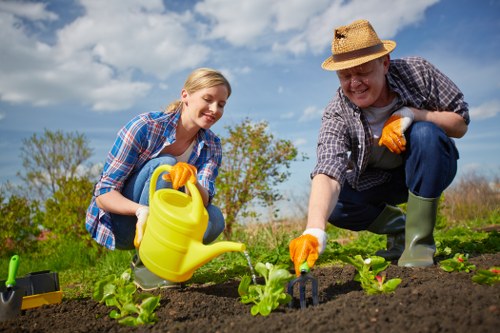 Partnerships are central to our sustainability success. We work with local charities and community groups to redirect reusable materials: good soil, planters, bricks and timber can find new life through social projects, allotments and community gardening schemes. Our formal partnerships include charitable rehoming of salvaged garden furniture and material donations to community food-growing initiatives.
We maintain clear records of material flows so clients receive transparent breakdowns of how garden waste was processed. This reporting supports corporate clients and community schemes that need evidence of diversion from landfill for environmental reporting or grant applications. Transparency is part of our environmental promise.
Operationally, staff follow a waste hierarchy: avoid, reduce, reuse, recycle, and only as a last resort send to energy recovery or disposal. Reuse is often the highest-value outcome — repurposing paving, salvaging benches, or donating composted material back to community gardens reduces demand for new resources.
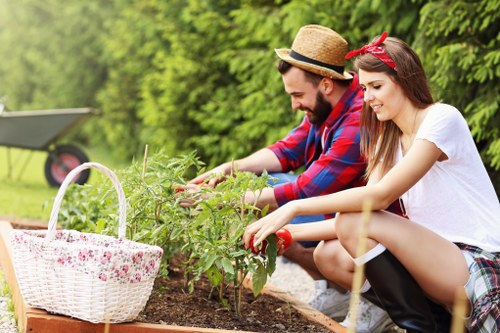 Finally, we continue to invest in training and technology to lift recycling rates. Regular crew training in on-site separation, use of electric and low-emission vehicles, and relationships with transfer stations and charities will help us meet and exceed our 80% recycling target over the coming seasons. If your project needs a sustainable gardening partner in Croydon, our approach delivers tidy, attractive gardens while protecting local ecosystems and reducing carbon footprints.